
Six months ago, you rolled out a refreshed benefits package that included mental health support, access to financial literacy tools, and even pet insurance. You spent months researching what employees need most as part of your employee benefits strategy.
And yet most employees haven't given your package a second glance.
The high-value options are sitting untouched.
This isn’t a benefits problem. It’s a problem with employee benefits communication. In fact 73% of benefits brokers say improving benefit communication should be a top priority.
Without clear and frequent messaging, even the best offerings can get buried.
Make the value visible; otherwise, it will be ignored.
If communications don’t connect the offering to real financial outcomes, people stick with what they know, even if it costs more.
Clearer messaging turns ignored emails into action. Here's how to make that happen.
Key Takeaways
- Employees often skip high-impact benefits like debt optimization or student loan help, not due to disinterest, but because the value isn’t clearly communicated.
- Vague feature-based messaging fails; clear, dollar-driven outcomes (like "$312 monthly savings") are what trigger action.
- Traditional open enrollment messaging is mistimed and easily ignored; ongoing, life-triggered communication performs better.
- Benefits utilization increases by 40–60% when employees understand real-world savings, not just see a list of offerings.
- Different age groups require different communication formats; younger workers want mobile simplicity, older employees prefer clarity and consultation.
- Underutilized benefits cost organizations more than money, they reduce morale, increase turnover, and undermine total compensation value.
Why Employees Ignore High-Impact Benefits
Employees routinely overlook benefits that could save them thousands. Debt optimization tools, mortgage refinancing help, and student loan relief are often overlooked.
Not because they don’t care. Because no one has shown them why it matters.
Prevent Blind Spots With Better Wording
77% of Americans are confused by basic health insurance terms. That's 77% of your workforce that don't understand what you're telling them, but will smile and nod politely.
Too many benefit programs speak in bullet points. “Includes refinancing support.” “Covers student loan guidance.” Employees see a checklist, not a savings opportunity.
A 2% rate drop on a $300,000 mortgage equals $6,000 saved annually. Most won’t make that connection on their own. They need the numbers spelled out: “This tool could cut $500 from your monthly payment.”

Without that clarity, people tune out. Complexity feels risky. Financial jargon gets ignored. And stressed employees don’t have the bandwidth to dig for answers.
Knowing a benefit exists isn’t the same as using it.
Many workers remember seeing a debt consolidation program in their onboarding packet. But they never followed up. Why? Because nobody translated it into a monthly dollar figure or explained what steps to take.
Company Culture & Benefit Uptake
How you discuss benefits conveys a message about what you value.
An annual email buried in onboarding tells employees, 'This isn’t urgent.' Regular conversations with managers, senior leaders, and peers convey a different message: this is working for us, and it can work for you too.
Culture drives curiosity. It sparks questions. It builds trust and, what Deloitte calls, ‘irresistible organizations’
The Awareness vs. Action Problem
Behavior doesn’t change with more information. It changes with clarity and timing.
Spell out the savings. Map out the steps. Show what changes today, not in theory. For example:
- “Switching to this loan could save you $350 per month.”
- “Your health plan covers therapy, no referrals needed.”
- “This benefit helps pay down your student loans by $100 each paycheck.”
Make it immediate. Make it real.
That’s the kind of communication that sticks. That’s how benefits move from ignored to indispensable.
Why Traditional Benefits Communication Fails
Most benefit announcements land in inboxes and stay unread. A subject line like “New Health Insurance Options” doesn’t spark curiosity. It signals the need for additional forms to fill out.
Mass emails list every benefit in one go, assuming employees will sort through it all. But nobody sifts through ten bullet points on insurance premiums during a lunch break.

Launching new programs during onboarding or open enrollment only adds to the noise. When employees are inundated with forms, passwords, details, and regulations, they don’t absorb the information about the services that will genuinely make a difference in their lives.
They skim and forget.
Another misstep: listing features with no real-world tie-in. Telling someone their plan includes “free preventive care” doesn’t mean much.
Showing them that their next physical, bloodwork, and vaccines would cost $0? That sticks.
The core issue is that communication prioritizes availability over impact. It informs, but doesn’t persuade.
To change behavior, you must demonstrate the value. Spell out the monthly cost difference between the two health plans. Walk someone through what a $20 copay gets them. Provide real, straightforward steps they can take.
People don’t need more information. They need clarity, relevance, and timing. That’s how benefits move from paper to practice.
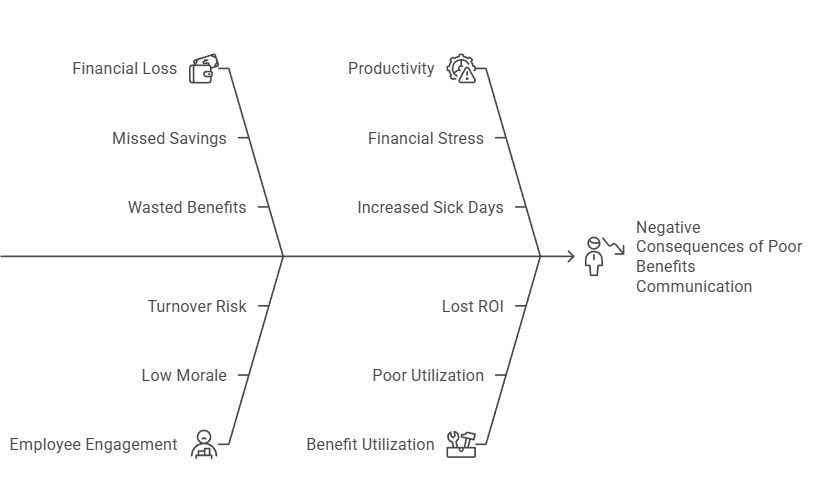
The True Cost of A Poor Employee Benefits Communication Strategy
When employees miss out on benefits, they don’t just lose perks. They lose money, time, and peace of mind. Employers lose engagement, productivity, and talent.
Here’s what’s at stake:
- Missed savings: One uninformed employee could pay $50,000 more in mortgage costs over time.
- Wasted benefits: Tools that could reduce credit card interest or student loan payments often sit unused, with only 28% of employees consistently taking advantage of them.
- Financial stress: Debt and confusion bleed into productivity, leading to more sick days and costly errors.
- Turnover risk: Employees who feel unsupported are more likely to leave their organization. Replacing them can cost up to 200% of their salary.
- Low morale: Workers who don’t understand what’s available feel overlooked and frustrated.
- Poor utilization: A telehealth benefit or fertility subsidy hidden in a PDF isn’t a benefit. It’s a missed opportunity.
- Lost ROI: Every underused benefit is money spent without return.
Dive deeper: Explore the full cost of employee benefits
Ongoing, clear communication turns your benefits from a checkbox to a difference-maker. Employees don’t need more options. They need help using what’s already there.
Here's how you can do that:
Step 1: Transform Your Messaging with Real Dollar Impact
Revamp your benefits messaging by highlighting specific dollar amounts employees will save. Most companies describe the features of their benefits, neglecting the tangible gains for employees.
Your current benefits communication likely emphasizes features. You describe "comprehensive health programs" or "financial wellness resources." These terms hold little significance for individuals struggling with family health or financial stress.
The value of benefits is unmistakable when presented with actual savings.
Replace vague promises with tangible outcomes. Illustrate to employees the exact amount of money they will retain.
Sell The Benefit, Not The Feature
The above heading is a rule of thumb in the world of marketing and copywriting.
To better communicate benefits, abandon the practice of selling what benefits include. Instead, focus on what employees achieve.

For instance, instead of "comprehensive debt management," articulate "reduce your total debt payments by $500 monthly." This transformation fundamentally alters the approach.
Creating Concrete Examples
Make it real, or it won’t matter.
If you’re offering free parking to encourage office attendance, show what that means. Don’t just say “parking included.” Say “Skip the $20 garage fee every day, your spot is covered.”
Use everyday math. Five days in the office means $400 saved each month. That’s not a perk. That’s dinner out, gas in the tank, or part of a daycare bill.
Shape the message for each group. A new hire might care about beating the morning scramble for street parking. A parent juggling drop-offs wants predictability. A senior team member values convenience and time.
Don’t just list what’s offered. Paint a picture of what it solves. Make the benefit feel like a win, not a detail. That’s how you turn information into action.
How Apriority Simplifies Complex Benefits
Mortgages. Student loans. Refinancing options. Most employees don’t have time to sort through it all, so they don’t.
Apriority turns that complexity into a straightforward number: how much you’ll save each month.
Our system connects to your employees’ real loan data, scans for lower rates, and breaks down their options into clear, dollar-based outcomes. No guesswork. Just a personalized savings figure they can understand at a glance.
Instead of overwhelming spreadsheets, they see: “You could save $287/month on your mortgage.” That clarity drives action.
We deliver these updates across multiple touchpoints, email, mobile, and print, so employees see the value, not just the feature.
Want to make your benefits package work harder? Let’s talk about adding Apriority to your offering. Reach out today, and we’ll show you exactly how it fits.
Step 2: Implement Simple but Better Communication
Employees don’t act on benefits they don’t understand. Making communication more straightforward doesn’t mean saying less, it means saying what matters, clearly and at the right time.
Confusion kills employee engagement and satisfaction. Clarity drives it.
Show Benefits, Don’t List
Skip the features. Focus on outcomes. Replace “refinancing available” with “you could save $312 a month.” Replace “free parking offered” with “your daily garage fee? Covered.”
Use clean dashboards that put real dollar amounts front and center. No jargon. No guesswork. No searching through tabs.
Your benefits dashboard should feel like a banking app. Intuitive. Immediate. One screen, one answer: what do I get, and what do I do next?
Break Screen Fatigue with Physical Touchpoints
Not everything should live online. For big decisions, people want something they can hold, circle, share, and leave near their keys or on the kitchen table to think about.
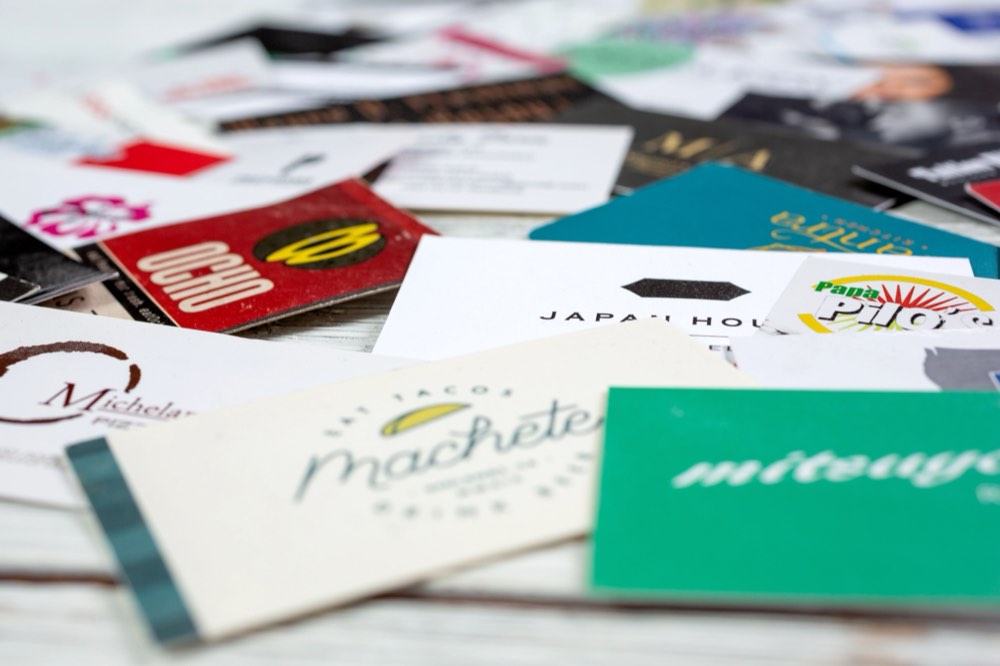
Send printed summaries home. Add QR codes for fast digital follow-up. Highlight a benefit. Give people space to think about it, away from the noise of Slack and inbox pings.
Tangible materials add weight. They tell employees: this matters.
Time It Right
Too many benefit messages are sent out when no one is listening. Launch emails, onboarding overload, open enrollment chaos, they blur together.
Pinpoint moments that actually move people:
-
First 90 days, when habits are being built
-
Life changes, marriage, new baby, home purchase
-
Annual reviews, when people are thinking long-term
Bring benefits into those moments. That’s when they matter most.
Automate What Works
Smart alerts cut through the noise. “New savings available” lands better than “don’t forget your benefits portal.”
Set up nudges that align with paydays or key milestones, using text to convey urgency. Push notifications for reminders. Email for details. Match the message to the channel.
Every alert should be actionable. A button. A link. A next step. Don’t just inform, drive action.
Step 3: Establish Ongoing Action-Based Communication
Most employees don’t act on what they don’t remember. One email during open enrollment won’t cut it, not when they’re already overwhelmed and skipping through dozens of unread HR updates.
Benefits only make a difference when the timing is correct, the message is clear, and the action is easy.
Stop Treating Open Enrollment as the Only Window
If your entire communication plan hinges on a two-week window in November, you’re missing 50 weeks of opportunity.
Shift from once-a-year announcements to continuous, need-based communication:
- Push telehealth during cold and flu season at the start of fall.
- Highlight family care benefits the week school lets out.
- Highlight retirement planning tools in January when many set financial goals.
- Consider spotlighting gym membership or fitness reimbursement programs during the spring, when outdoor activities pick up.
- Communicate about tuition reimbursement programs at the start of the academic year (September).
- Promote financial wellness webinars in tax filing season (April).
- Highlight travel or commuter benefits before major holidays, when commutes tend to increase.
- Share reminders about preventive care screenings during national health awareness months, such as Breast Cancer Awareness Month in October.
- Announce updates or enhancements to benefits after employee feedback surveys.
Keep benefits top-of-mind when they matter most. You don’t need more emails, you need better timing.
Trigger Communication Based on Life, Not Calendars
People care when it’s personal. Target messages to match real-life moments:
- When rates drop, notify homeowners about refinance options.
- When someone updates their address, offer moving support benefits.
- After a birth or adoption, promote family leave and dependent coverage.
Track employee milestones, both professional and personal (when it doesn’t encroach on privacy). Then deliver help when it’s needed, rather than when HR is ready to talk.
Survey Often. Act Fast.
A once-a-year survey won’t catch shifting stress or emerging needs. Go quarterly. Keep it short.

Focus on what’s happening now.
Three smart questions beat 30 vague ones:
- Are you feeling financially secure?
- Have you used any mental health resources this quarter?
- What benefit would you like to understand better?
Once you have answers, act quickly:
- High stress? Promote mental health apps and access to counseling immediately.
- Low awareness of HSA benefits? Send a one-pager that breaks down the details.
When employees see their input change what they receive, trust builds. So does participation.
Measuring Success: What Early Adopters Are Seeing
When employers shift from passive benefit rollouts to targeted, ongoing messaging, usage climbs, and so does impact.
Early adopters of action-based communication aren’t just checking boxes. They’re seeing meaningful results in participation, savings, and retention.
This isn’t theory. Real numbers back it.
More Usage, Less Confusion
Once employees understand what they get and what it saves them, benefit usage spikes.
With only 31% of U.S employees actually engaged with their company, the demand for less confusion is obvious.
The biggest jumps appear in areas that were once misunderstood or ignored, such as student loan assistance, refinancing, and debt consolidation. The shift? Moving from vague benefit blurbs to statements like, “Switching your loan now could save $200 a month.”
That kind of clarity gets clicks. It also gets action.
Real Savings Employees Can See
Better communication leads to better financial outcomes.
One employer reported an average annual savings of $3,200 per employee after implementing more direct messaging about debt programs.

Those savings aren’t limited to loans. With the right prompts, employees started tapping into underused resources like:
- HSA matching
- Tuition reimbursement
- Free annual health screenings
- Professional development stipends
Every dollar they didn’t leave on the table added to their total compensation, and their loyalty.
Higher Retention Starts With More Effective Communication
Employees don’t just stay for pay. They stay when they feel the full value of what they’re offered.
Dive Deeper: Explore how thoughtful employee incentives boost engagement beyond compensation.
Companies using clear and effective communication based on actions saw a 25% drop in voluntary turnover in the first year. Those organizations connected the dots between benefits and value, on paper, in person, and on-screen.
Employees who know how their benefits improve everyday life are less likely to search for a better deal elsewhere.
They already have one.
Keep Leadership Focused on the Right Metrics
Your C-suite doesn’t care about email open rates. They care about results: cost savings, productivity, and employee retention.
Meet with leadership regularly. Don’t report that a newsletter was “well received.” Show them how many employees took action, booked a counseling session, reached out for a student loan review. Signed up for training.
This is especially critical when tailoring a small business benefits package, where every dollar counts
The real benchmark isn’t awareness. It’s a behavior change.
Consider Your Aging Workforce In Your Benefits Communication Strategy
Different generations engage with benefits differently. That’s not a stereotype, it’s a strategy based around flexible employee benefits.
One message, one format, one delivery method won’t connect with everyone.
Younger employees want speed. Older employees want clarity. You need to deliver both.
Speak Their Language, All of Them
Older workers often want a breakdown they can sit with. They might ask for printed materials or a phone call. They’ll want to discuss it further before making changes to a mortgage or adjusting retirement contributions.

Younger workers want mobile access and real-time updates. They expect digital tools that can be used within a 15-minute break, no deep dive, just a number and a next step.
Both groups are making decisions that affect their futures. They just take different paths to achieve their goals.
Communicate Employee Benefits With One Message, Many Channels
Don’t build separate systems. Build flexible ones. Use the same core benefit, say, debt savings of $275 a month, but offer different ways to access it:
- A push notification for mobile-first users
- A detailed PDF guide for those who ask for more context
- A phone consult option for anyone juggling multiple decisions
That single message travels further when it meets people where they are.
Give Each Generation a Way to Their Benefits Package
Start with a shared goal: save more, stress less. Then, provide each employee with the format that suits them best.
- Email with visual breakdowns
- Texts that link to savings calculators
- Printed postcards with QR codes
- Short videos that show how it works
This doesn’t complicate your program. It makes it usable. Using benefits drives employee satisfaction, engagement, retention, and loyalty.
Don't Let One Format Cost You a Workforce
If you only talk in PDFs, you lose mobile-first employees. If you only build apps, you leave behind employees who want a call. If you only train managers, you leave most of your staff guessing.
Offer choice. Speak in outcomes. Make every benefit easy to find and easier to use, no matter the employee’s age.
Smart communication adapts without fragmenting. That’s how you reach everyone without losing anyone.
Conclusion
If employees aren’t using high-impact benefits, the issue isn’t access. It’s communication.
Programs like debt optimization, mortgage support, and student loan assistance often remain unused, not because they lack value, but because the value is unclear.
Clarity drives action. Without it, employees miss out on thousands of dollars in potential savings while better options remain unexplored in the benefits portal.
Apriority changes that. Our platform transforms complex benefits into tangible monthly savings, delivered in clear language through intelligent, automated alerts. No guesswork. No digging.
Start by identifying which benefits are underused. Then fix the communication, not the benefit.
We’ll help you connect your employees to the value they’ve already been offered.
Talk to Apriority today. Let’s turn missed opportunities into real savings.
FAQ
What's the difference between benefits awareness and benefits utilization?
Awareness signifies that employees are cognizant of the existence of benefits. In contrast, utilization demonstrates their practical application to enhance financial well-being. Traditional communication strategies fall short, focusing on the features of benefits without illustrating their tangible outcomes. For example, highlighting "debt consolidation services" without quantifying the reduction in monthly payments, by $400, leaves workers uninformed about the benefits' true value.
How much does poor benefits communication actually cost organizations?
The financial repercussions of inadequate communication are substantial. Employees who fail to leverage debt optimization benefits incur unnecessary expenses on mortgages, student loans, and credit cards. This financial strain not only leads to increased turnover but also incurs significant recruitment costs and productivity losses. When employees recognize the tangible financial benefits of their benefits, retention rates improve, as they perceive their total compensation more comprehensively.
How can we change our benefits messaging to drive action?
Transition from promoting features to highlighting outcomes. Instead of merely stating "comprehensive debt management," emphasize "reduce your total debt payments by $500 monthly." Present specific dollar amounts, timelines, and step-by-step guidance. Transform abstract benefits into concrete examples, such as "Refinance your mortgage through this benefit and save $150,000 in interest over 30 years." Workers are more likely to engage with specific numbers than vague promises.
What communication tools work best for employee benefits education?
Opt for simplicity over sophistication. Design dashboards that instantly display savings potentials. Utilize physical materials for complex decisions, such as debt restructuring, where employees require time to evaluate options. Your communication tools should emulate consumer apps, intuitive, immediate, and focused on action. Employees should not need extensive training to understand the value of their benefits.
When should we communicate about benefits beyond annual enrollment?
Implement continuous communication cycles that trigger when employees require specific benefits. Send alerts about debt optimization when interest rates drop. Promote mental health benefits during periods of heightened stress. Conduct quarterly surveys to gauge financial concerns, not just satisfaction levels. Workers engage with benefits when the timing aligns with their personal circumstances, not HR calendar dates.
How do we measure success in benefits communication?
Focus on metrics that reflect the true impact of your efforts: benefits enrollment rates, employee savings, and voluntary turnover. Early adopters often see a 40-60% increase in usage when they understand the exact savings benefits offer. Workers can save thousands annually on debt payments by accessing optimization benefits. Success is measured by employee action, savings, and retention, demonstrating an organization's commitment to financial wellness.
Do different age groups need different communication approaches for employee benefits?
Absolutely. Older workers prefer detailed explanations and personal consultations for significant financial decisions. In contrast, younger workers seek mobile-friendly tools and immediate calculations. Older employees often have more complex debt portfolios requiring thorough analysis. Younger workers may prioritize student loan optimization and first-time homebuyer benefits. Offer multiple access points while maintaining consistent messaging about savings opportunities.
What should we audit first in our current benefits communication?
Begin by assessing the current utilization rates for high-impact benefits like debt optimization. Investigate: Are employees utilizing these benefits? Do they comprehend the savings potentials? Can they access assistance when needed? Most organizations discover communication gaps that result in employees paying thousands in unnecessary interest payments and fees. Prioritize connecting benefits to measurable financial outcomes over mere communication metrics.