
Spring 2025 brings tighter household budgets and rising financial pressure.
First, there's the rising cost of living. In addition to the inflation figures we've seen over the past couple of years, recent widespread tariffs on imported goods are expected to increase prices for everyday items further.
Analysts at The Kaplan Group estimate families may pay $1,200 to $3,000 more this year for basic goods alone.
With essentials becoming less affordable, keeping up with debt payments gets harder.
Add economic unpredictability to the mix: policy shifts like sudden tariffs have rattled markets and shaken confidence.
Long-term planning now feels out of reach for many.
For many Americans, managing debt has shifted from a smart strategy to a survival skill.
A Potential Silver Lining? The Interest Rate Outlook
Interest rates remain high, but the tone is shifting. Analysts and policymakers are now openly considering rate cuts later in 2025. For borrowers, that shift could open the door to meaningful savings.
Why the change?
The Federal Reserve is trying to strike a balance: cool inflation without dragging growth too far down.

If tariffs, global pressures, or slowed consumer spending damage the economy, the Fed may ease rates to avoid or respond to recession factors. Markets have started pricing in this possibility, with some projections suggesting cuts could begin in the second half of the year.
Still, nothing is certain. Every decision depends on incoming data, political dynamics, and global developments. Rates may drop, or they may hold steady longer than expected.
That uncertainty makes timing critical. Even a small rate cut can mean significant savings for households with variable-rate debt or refinance options. Staying alert—tracking trends and watching Fed signals—can turn that potential shift into a financial advantage.
Not All Debt is Created Equal
Refinancing isn't one-size-fits-all. Debt comes in different shapes, and each type reacts differently to market shifts.
Each loan with its own rules, risks, and savings potential.
-Mortgages and Home Equity Lines of Credit (HELOCs): Often the largest debts with the longest terms. Their interest rates can be susceptible to broader market benchmarks, making them prime candidates for refinancing when rates drop.
-Auto Loans: Typically have shorter terms than mortgages. While influenced by market rates, individual creditworthiness plays a huge role. Refinancing is often overlooked even though refinance savings could be available.
-Credit Cards: Known for carrying some of the highest interest rates, often variable and, according to analysis from The Kaplan Group, recently averaging over 22% APR. Strategies here usually focus on accelerated payoff or consolidation, although promotional balance transfers can offer temporary rate relief. Traditional refinancing isn't typically applicable in the same way.
-Student Loans: A particularly complex area with distinct differences between federal and private loans. Refinancing private student loans is common, but refinancing federal loans into private ones means losing access to potential government programs and protections – a critical consideration.
Interest rate movements don't impact these different loan types uniformly, and their potential for refinancing differs greatly. Therefore, headline news about "interest rates falling" doesn't tell the whole story for your specific situation.
What matters is how those shifts apply to your situation.
Real optimization comes from knowing which levers move and which ones don't.
Beyond Savings: Debt Optimization as Financial Wellness
Cutting your interest rate feels good, but what it really unlocks is control. Less interest means more flexibility, security, and room to breathe.
Every dollar you avoid spending on interest strengthens your financial position. That extra breathing room each month may allow families to absorb rising costs or build a savings buffer that can keep unexpected expenses from financial emergencies. That's resilience.
And the mental lift? Real. Knowing you're not overpaying, staying ahead of market shifts, and keeping your debt in check lowers financial stress. It quiets the noise. It gives you confidence in your day-to-day and clarity in your planning.
This kind of progress builds on itself. Optimized debt goes hand in hand with smarter spending, focused repayment, and more deliberate financial choices. Delay a big purchase here, tighten your budget there, and those decisions will stick when built on a solid debt foundation.
Debt optimization isn't just about the math. It's about peace of mind now and momentum for the future.
It's a lever.
Pull it, and everything else gets a little easier.
Why Speed and Data Matter
Reading a news article about lower interest rates is one thing; successfully taking advantage of it is another.
Market dynamics during periods of falling rates mean that the best opportunities can be fleeting, making both speed and accurate information essential.
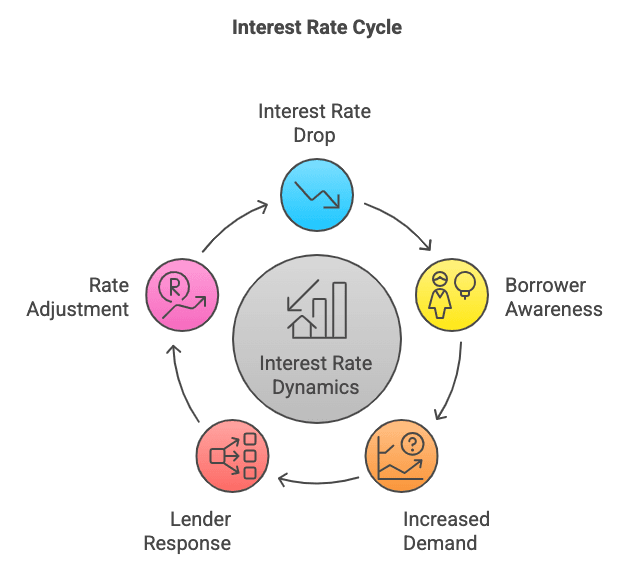
Here's how it typically unfolds: savvy borrowers across the country recognize the potential for savings when benchmark interest rates see a significant dip. This awareness triggers a surge in refinancing applications and inquiries flowing to lenders.
Like any business operating within market conditions, lenders respond to this sudden wave of demand. Facing operational capacity limits and managing their own risk portfolios, the market naturally adjusts.
This often means that the absolute lowest rates or most favorable fee structures available at the very start of a rate drop may edge slightly higher as application volumes swell. It's a standard supply-and-demand response within the financial marketplace.
What does this mean for you?
It underscores the point that timing is critical.
The window to lock in the most advantageous refinancing terms – securing the lowest possible rate and fees – can often be narrow before the market fully digests the rate move and adjusts pricing accordingly.
This is the race, not against the market itself, but against time and volume.
To win it, preparation matters. That means having accurate loan rate quotes at your fingertips, knowing your eligibility, and understanding what even a 0.5% drop could mean in dollars, not estimates, but specifics.
Waiting to gather that info during the rush puts you at the back of the line. By the time you're ready to act, the best deals may have already slipped through.
Imagine holding a $50,000 balance on an 8-year loan at 6.5% APR. If rates dip just 1% to 5.5%, refinancing will save you over $4,000 in interest and a $30/mo lower monthly payment.
Said differently, miss that window and lock in higher payments for the rest of the loan's life.
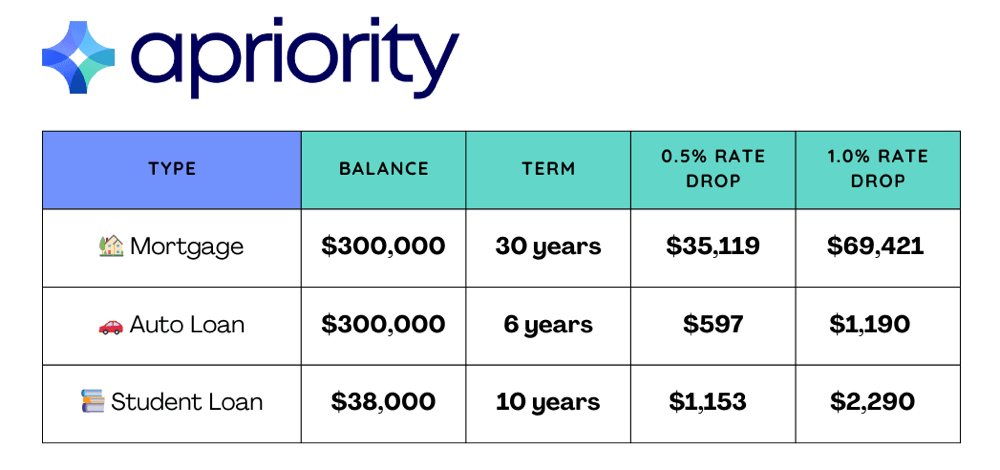
These are tens of thousands of dollars that most borrowers don't spot until it's too late. Tracking markets manually, knowing when to act, and jumping through paperwork—all before rates bounce back—requires more than good luck.
This is why vigilance matters—not just watching rates but being ready. Savings aren't theoretical. They're right there if you move fast enough.
For borrowers serious about saving, the edge doesn't go to the smartest. It goes to the fastest. And if you're doing this yourself and relying on "free quotes" to time the market, you're already behind. Here's why those quotes can cost you thousands.
The Challenge: Why Manual Monitoring Often Falls Short
Spotting a rate drop at the right moment isn't easy.
Most people aren't missing out on savings because they don't care, but because catching that window takes more time and know-how than they realistically have.
Price-shopping one loan, let alone several means filling out forms, weighing offers, checking credit impact, and trying to calculate break-even points
That's all before the follow-up flood of texts and robocalls begins.
For many, the cost isn't the rate but the attention it demands.

And in a world already stretched thin, doing that homework every few weeks or months just isn't going to happen.
What borrowers need isn't more research. It's less noise and less effort.
Now factor in the pace. A rate that looked appealing last week might be gone today. Big economic reports, Federal Reserve statements, global events—any one of them can move rates overnight. Tracking that manually is nearly impossible without constant attention.
There's a constant balance of fundamental and technical analysis, almost like trading on the stock market.
Add a full-time job, a family, and a to-do list that doesn't shrink, and suddenly, checking rates daily isn't just hard; it's entirely off the table.
That's why most people don't keep up.
Not from laziness. From overload.
The system favors those who have time, tools, and timing.
Everyone else?
They miss the dips. They pay more, not by choice, but by default.
Smarter Debt Decisions Start with Data, Not Guesswork
Refinancing existing debt is a strategic move aimed at improving financial health by securing better terms on current obligations.
This approach contrasts sharply with the practice of incurring new debt, which can increase financial strain, mainly when driven by external pressures.
Refinancing involves replacing an existing loan with one that offers more favorable terms, such as a lower interest rate or a different repayment schedule. This process can reduce monthly payments and total interest costs over the life of the loan.
For instance, refinancing a mortgage or consolidating high-interest credit card debt into a lower-rate loan can result in significant savings.

For example, during anticipated tariff hikes, some consumers consider making large purchases to avoid future price increases. However, financial experts advise against accruing new debt for such purposes, as it can lead to increased financial vulnerability without guaranteed benefits.
But knowing when refinancing makes sense isn't always obvious. Eligibility to loans changes over time with things like property value, income, and other debt, and it's difficult to spot the right moment and act on it.
This is where automation changes everything.
Smart platforms now track market shifts in real-time. They scan for better loan terms and track income, assets, property values, and credit scores. They can do the legwork for you, working on a goal you set: lower payments or total interest reduction. This isn't just automation. It's wealth management for those in debt - at scale.
Fintech tools that automate financial decisions don't just save time, they help users make timely and more informed choices. Instead of missed opportunities, users can set up notifications when the math says move. They make debt optimization work in the background, consistently and silently,. That shift from reactive to proactive turns scattered DIY effort into realizable savings.
Supporting Your Workforce: The Employer Role in Financial Wellness
Financial stress is not just a personal issue, but a workplace challenge with measurable business consequences. Employees grappling with financial concerns often bring that stress into the workplace, impacting productivity, engagement, and retention.
A study by BrightPlan found that employees lose over seven hours of productivity each week due to financial stress, costing U.S. employers approximately $183 billion annually. Additionally, 78% of leaders observed higher turnover rates as financially stressed employees sought better compensation or benefits elsewhere.
MetLife's 2025 Employee Benefit Trends Studyhighlights that financial concerns, including rising medical costs and economic uncertainty, are primary stressors for employees. This stress correlates with declines in holistic health, productivity, and engagement across the workforce.

Interest on debt often outweighs rent, groceries, or utilities, making it the biggest drag on financial freedom for many. When employers step in with automatic debt optimization tools, they show support and give their team what feels like a raise.
This kind of benefit speaks directly to the bottom line of working families. It boosts total compensation without touching salaries and builds lasting loyalty.
That's where innovative debt tools come in.
They signal that the company is invested in helping people save money, reduce stress, and take control of their future.
Advantages of Incorporating Debt Optimization Tools:
-Enhances Financial Wellness Programs: Directly addresses a primary source of employee stress, complementing existing wellness initiatives with a practical, high-impact tool.
-Delivers Tangible Value: Helping employees save potentially hundreds or thousands of dollars annually on their existing debt provides real financial relief. This saving can be a raise, boosting employee satisfaction and loyalty without impacting salary budgets.
-Offers Low Administrative Burden: Modern, tech-enabled platforms in this space are often designed for seamless integration and require minimal ongoing effort from HR or benefits teams.
-Boosts Competitive Advantage: Offering innovative, practical financial wellness benefits like automated debt optimization can significantly differentiate your company in the ongoing talent competition, aiding recruitment and retention efforts.
By providing access to tools that empower employees to take control of their debt, employers invest directly in their financial health in a much more strategic and leverage way than a simple salary or pay raise.

Managing debt in a rate-sensitive market shouldn't require a finance degree or hours spent tracking charts. Apriority simplifies everything.
Once connected, Apriority continuously monitors your existing loans, analyses refinance or restructuring and refinance opportunities, and tracks real-time market shifts. When it detects a personalized opportunity to save, it alerts you. It's not a generic headline. A specific, actionable insight based on actual loan terms.
Apriority solves three major problems:
-Timing: Catch rate dips before they vanish. Apriority alerts you that savings are opening up at the moment. -Complexity: Different loans, different rules. Apriority keeps track of them all automatically. -Effort: You don't need to monitor anything. Apriority does that around the clock.
This is automated debt intelligence. Users don't just hear when markets change; they learn when change means savings for them. In many cases, that translates to thousands saved without lifting a finger.
For employees, this means real relief, not theoretical advice. It's a benefit for HR leaders that provides total compensation boosts without the commensurate cost.
Taking Control in Uncertain Times
To save money, you don't have to chase the market or decode complex refinancing math. Apriority puts smarter loan decisions on autopilot: watching rates, tracking your terms, and flagging real savings when they appear.
For employees, that means less financial stress and more peace of mind—without extra work.
For employers, it's a way to offer what feels like a raise without increasing payroll. Financial wellness becomes a lived experience, not just a line in the benefits brochure.
Take the first step.
Connect with Apriority and start unlocking real savings from the debt you already carry. Better rates are out there. We'll make sure your team doesn't miss them.